
Lake Beulah's Shrinking Winters
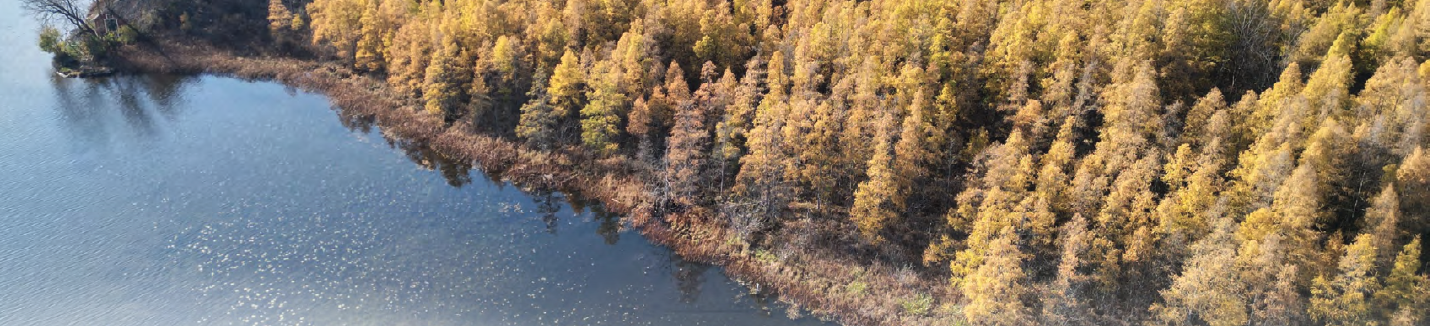
Those of us who’ve been around for a while know that something is going on with our weather. Winters sure aren’t what they used to be! It turns out we weren’t imagining things. Climate research now tells us winters are getting shorter by about two weeks per decade.
One piece of supporting data we already have is that ice duration on our lake is changing rapidly. Our friend Ann Alger’s ongoing record of ice on/off shows a trended average 28 day decrease in the lake being completely covered with ice from 1970-2020. (See Lake Views Spring 2020 for more on this.) With the trend accelerating, recent research shows a drop of 1.5 days/year of ice cover on the Great Lakes since 1995.
But ice cover is just the ‘tip of the iceberg’ when it comes to understanding what’s going on with our lake. Without getting too scientific, because of changes in density, the lake water mixes throughout the year with warm waters near the top in summer. In the winter it’s the opposite, with warm waters near the lake bed. The flip occurs when surface temperatures reach a ‘magic number’, 39.2ºF.
In between the top and bottom layers is Lake Beulah’s thermocline, a critical habitat for the Lake Beulah ecosystem. The thermocline is paramount to the ecological balance of Lake Beulah’s nutrient distribution, aquatic life and water mixing. You might have experienced the thermocline when you were swimming if you noticed the lake was suddenly colder. Fishermen like to fish the thermocline because that’s where many fish hang out.
EDITOR’S NOTE: Unfortunately, with the advent of wake enhancement technology, fishermen report Lake Beulah’s thermocline is often non-existent.
So what’s the big deal about the changing seasons? Experts tell us ‘there is so much going on at once’, so a shrinking winter will likely have cascading effects on Lake Beulah throughout the whole year.
The decreasing duration of ice cover will change the timing of warm/cold water mixing thereby impacting the food web and fish populations. Timing of warm water formation can result in microscopic plants blooming before they can be food for microscopic organisms used as food by fish. The result will be a drop-off in food for fish thereby impacting the entire food chain.
Ice also helps fall-spawning fish by protecting their spawning areas from wind and waves that would stir up sediment. Like clear evidence that large boat waves disrupt spring spawning, less disruption of sediment in the fall results in a greater number of baby fish hatching in the spring.
So, our Lake Beulah is showing signs of the times. With such a fragile ecosystem, dependent on so many factors we can’t control, it seems logical those of us here today would try to be as kind to the lake as we can possibly be.
Let’s do whatever we can to protect the lake we love, and by doing so, also protect our investment. For as we know, property on Lake Beulah commands a premium price because the lake is so pristine.
WHAT CAN WE DO YOU ASK?
• Avoid churning up the lake bed. See previous issues of LAKE VIEWS for more information.
• Avoid making large waves. See LAKE VIEWS.
• Avoid being indiscriminate with using salt to de-ice.
• Avoid using fertilizer on your lakefront lawn.
• Avoid cutting your grass right up to the shoreline and instead encourage native plantings.
EDITOR’S NOTE: This includes information from a Milwaukee Journal-Sentinel article, January 6, 2025.