
Starry Stonewort in Wisconsin Lakes: What It Is, Why It Matters, How to Identify It, and How We Respond
Starry stonewort (Nitellopsis obtusa) has recently been confirmed in Lake Beulah. While it may resemble a harmless underwater plant, its biology and growth patterns make it a serious threat to small inland lakes across Wisconsin. This article explains what starry stonewort is, how to identify it, how it impacts lake ecosystems, and what steps we can take together to slow its spread and protect our lake.
What Is Starry Stonewort?
Starry stonewort is an invasive freshwater green macroalga native to Europe and Asia. It spreads through both fragments and tiny star‑shaped reproductive structures called bulbils, which allow it to rapidly colonize new areas and persist even after removal efforts.
It was first detected in Wisconsin in 2014 and has now been verified in 39 inland lakes, primarily in southeastern Wisconsin, as well as coastal portions of Lake Michigan and Green Bay.
How to Identify Starry Stonewort (Quick Guide)
Starry stonewort looks similar to several native macroalgae, but a few key traits make it easy to distinguish:
Smooth, bright‑green stem — native Chara species have rough, crunchy stems.
Branchlets in whorls of 4–8 — upper branchlets often look unevenly forked because of short bracts.
White, star‑shaped bulbils — found at the base or along the stem; native species either don’t produce bulbils or produce round ones.
Often much taller than native look‑alikes — starry stonewort can grow over a meter tall.
If you see smooth stems + uneven branchlets + star‑shaped bulbils → it’s starry stonewort.
Why Starry Stonewort Is a Problem for Wisconsin’s Inland Lakes
Starry stonewort forms dense mats that crowd out native plants, degrade fish habitat, and alter nutrient cycling. It spreads rapidly and is extremely resilient — fragments and bulbils can survive drying, freezing, and short exposure to hot water.
Across Wisconsin and the Great Lakes region, chemical treatments (primarily copper‑based herbicides), diver‑assisted suction harvesting, hand‑pulling, and drawdowns have shown limited long‑term effectiveness. Repeated copper‑based treatments can also accumulate in sediments and harm native macroalgae and other aquatic life, so non‑chemical strategies are preferred.
Preventing Spread: Ballast Tanks and Live Wells
Starry stonewort spreads primarily through fragments and bulbils carried in trapped water. Two boat types pose the highest risk:
Wake boats with ballast tanks
Ballast tanks can trap 20–2,000+ pounds of water, and residual water can contain viable starry stonewort fragments for up to four days. Drain tanks on land, cycle them repeatedly, open access ports to dry, and avoid moving between basins or lakes.
Fishing boats with live wells
Live wells often retain water and plant fragments. Drain completely on land, remove debris, leave open to air‑dry, and never transport fish or bait water between lakes.
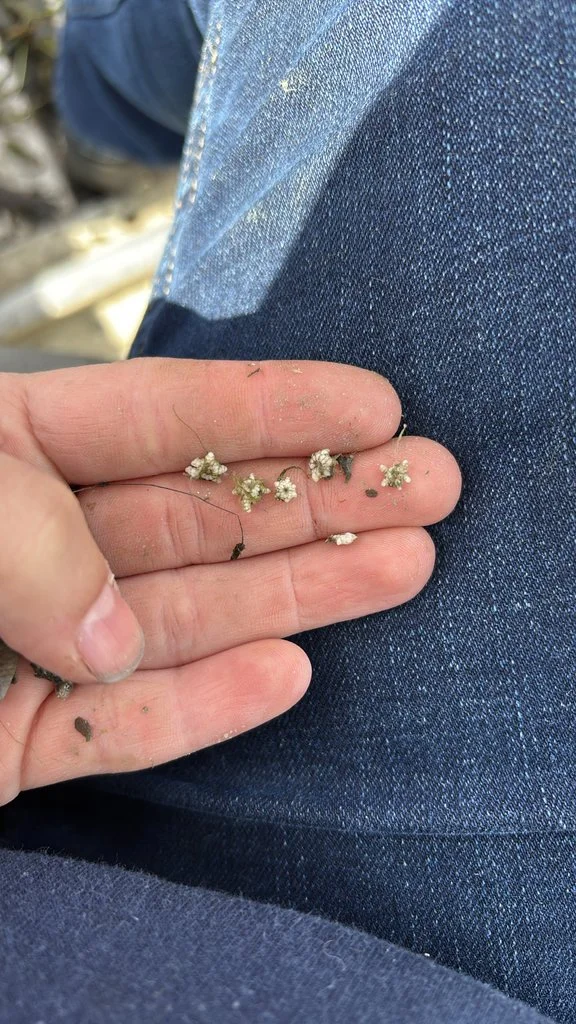
Observation © pvnd0ra CC BY-SA 4.0, via Wikimedia Commons. https://www.inaturalist.org/observations/360710035
What We Can Do About It
Clean, Drain, Dry all boats and equipment.
Support Clean Boats, Clean Waters (CBCW) inspections.
Participate in shoreline surveys and report suspicious growth.
Continue monitoring and adaptive management — mechanical removal, diver‑assisted suction harvesting, and drawdowns are being studied for effectiveness.
Call to Action: We Need Grant‑Writing Volunteers
To respond effectively to starry stonewort, PLB needs community support—especially from those with experience in grant writing or nonprofit funding.
Are you, or someone you know, a grant writer? We are seeking volunteers to help identify, evaluate, and apply for grant opportunities that can support starry stonewort monitoring and management. Your expertise could directly strengthen our lake’s long‑term protection efforts.
Funding through Wisconsin’s Surface Water Grant Program can support AIS research, prevention, and response projects. Experienced grant writers can help us pursue these opportunities.
If you’re interested in helping—or know someone who might be—please reach out to the PLB Board. Even a small amount of guidance can make a meaningful difference.
Together, We Can Protect Lake Beulah
Starry stonewort is a challenging invasive species, but early action, community involvement, and strategic funding can help us contain its spread and safeguard the lake we love.
Learn more at the Wisconsin DNR Aquatic Invasive Species page.